Monday, July 31, 2006

Humpbacks!! Meet Hobo and Parachute

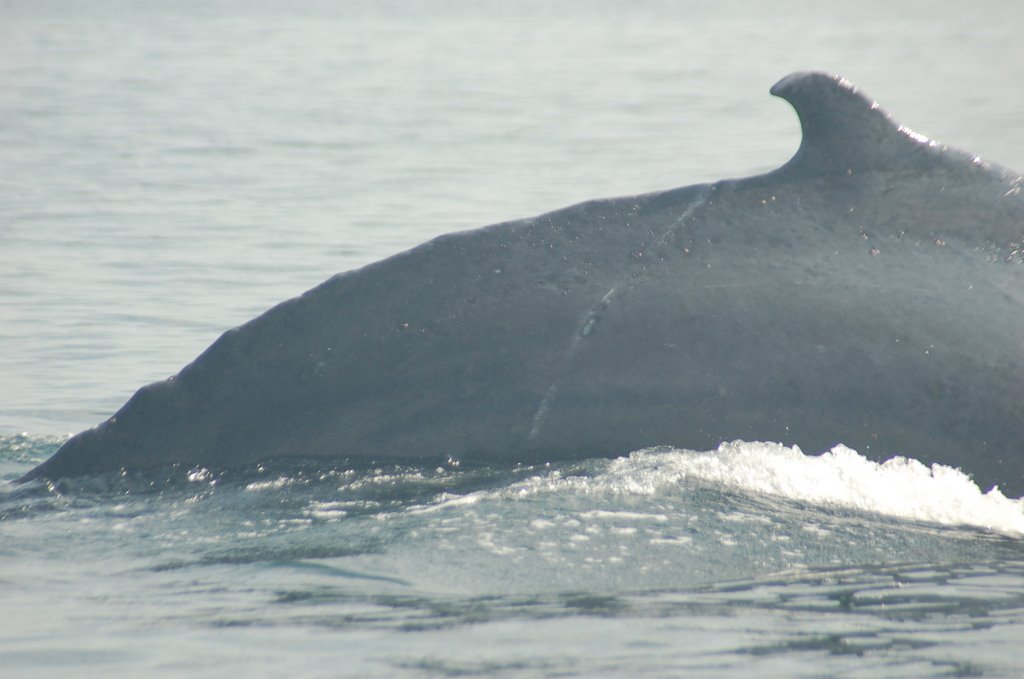
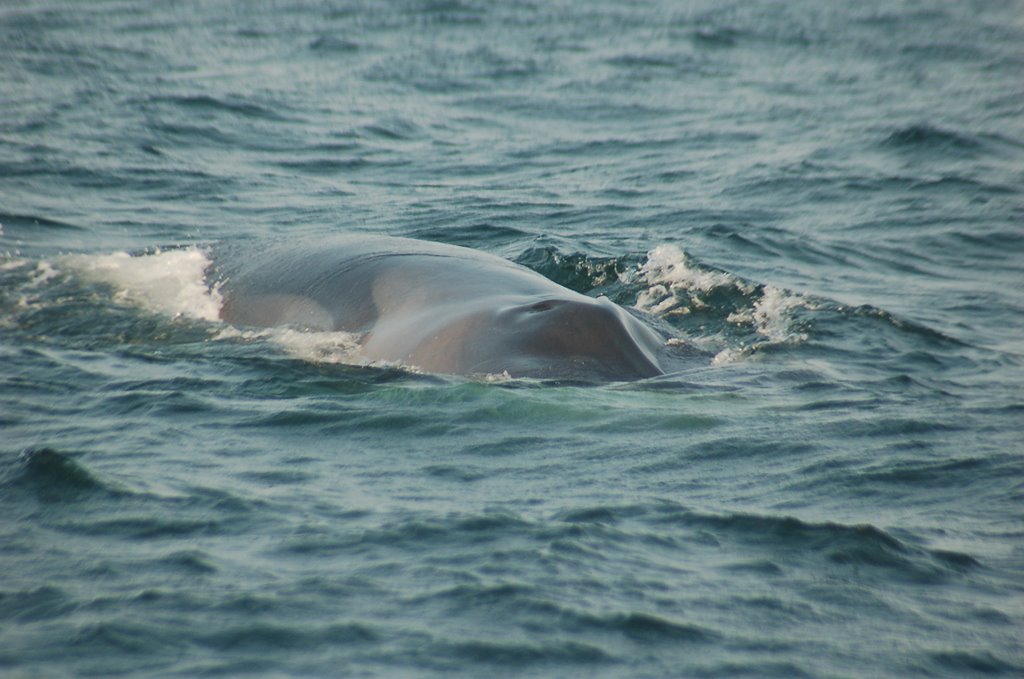
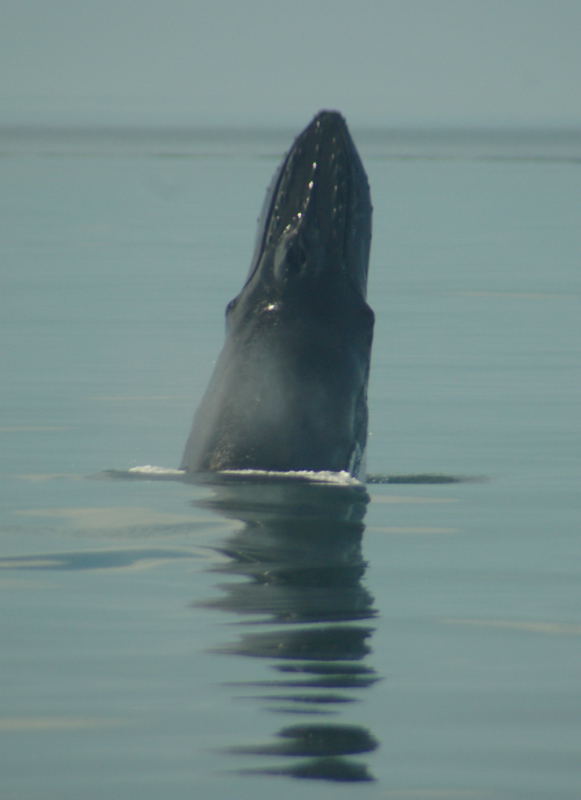
Hello, it's Danielle again, senior naturalist and photographer with Quoddy Link Marine. What a day! Again, no fog, light winds and unlimited visibility. On our morning trip we had the pleasure of watching a very active humpback. "He" was breaching, partial and full as well as slapping his fluke on the surface of the water. This behaviour was a special sighting as it isn't seen on every trip. Here you can see the rostrum, or top of his head. The small bumps around the edge are tubercles and there is a small, coarse hair growing out of each believed to have a sensory purpose. The large bump in the middle is his blowhole.


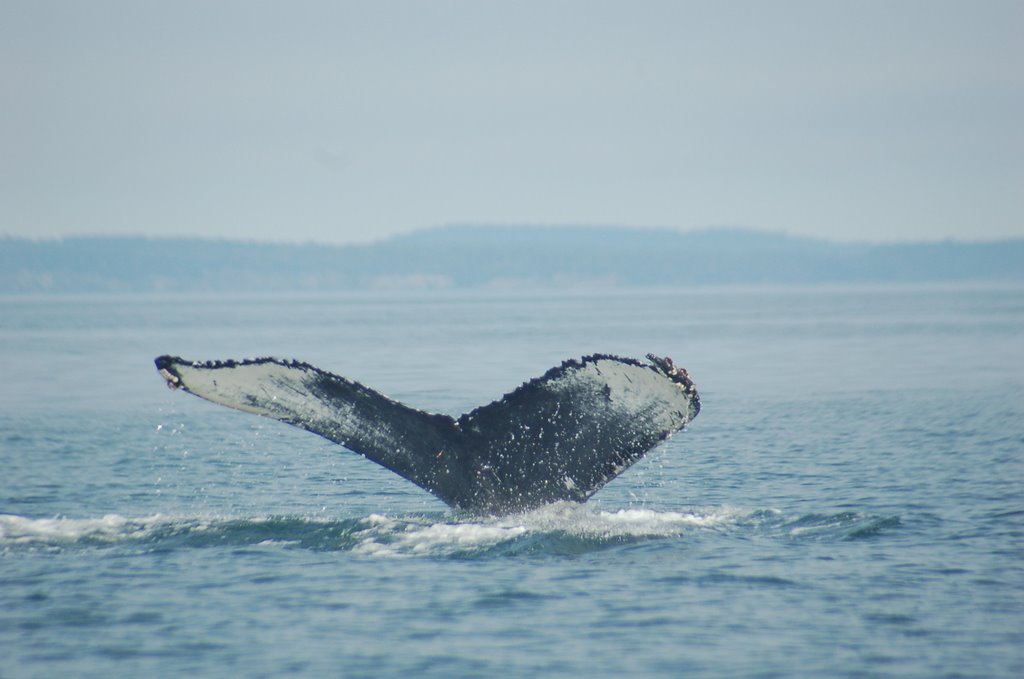
Here is the underside of the fluke of the breaching humpback. The identity has been confirmed as Hobo.


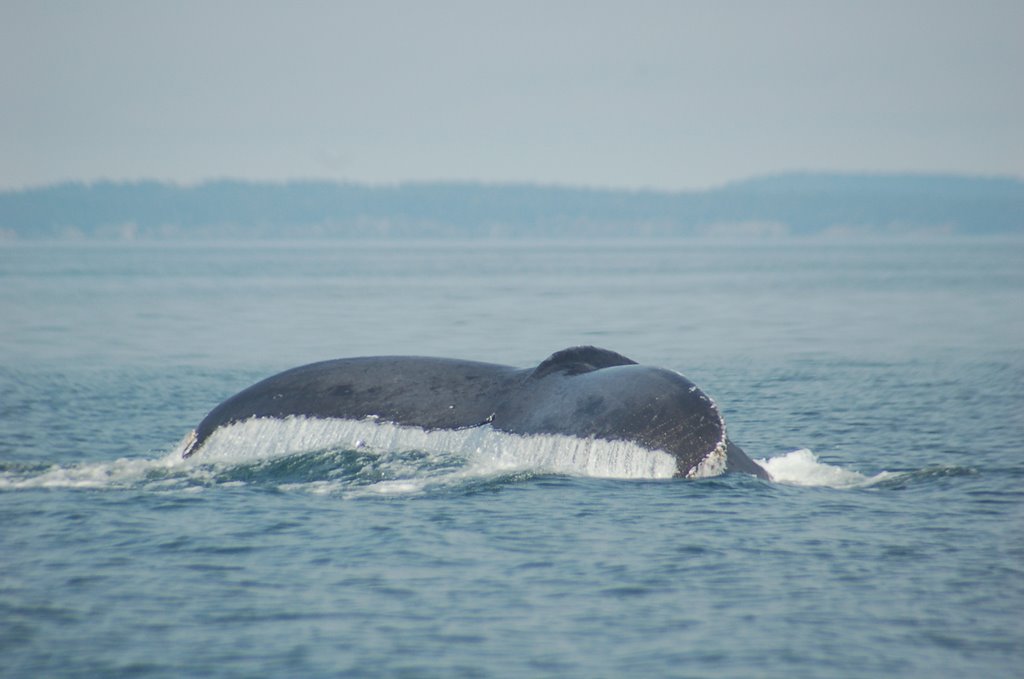
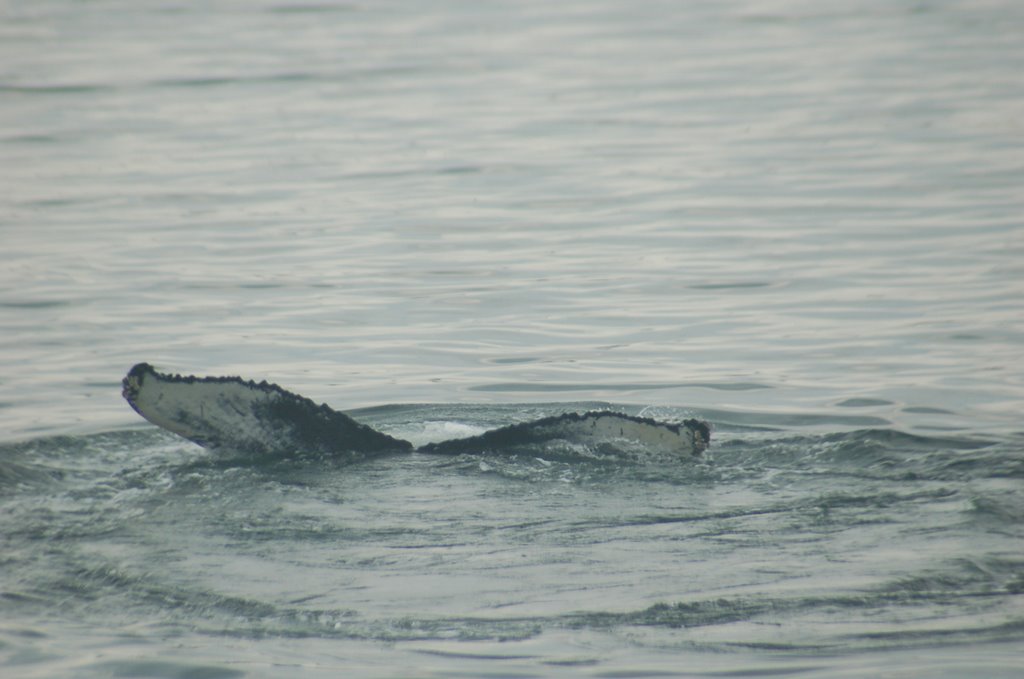
This photograph was taken today while Hobo was slapping his fluke on the water. We also saw Hobo during the 2005 season.


On our evening trip we saw another humpback whale. This is Parachute, a whale we have seen for the past 3 seasons. We couldn't have asked for a better day, it reminds me why I love my job. Thanks to Jooke Robbins at the Provincetown Center for Coastal Studies in Massachusetts for help in identifying the humpbacks.

Sunday, July 30, 2006

Unlimited visibility and finback whales!

NO FOG!!! The first day in many weeks with NO FOG. We had unlimited visibility and could see the Wolves and Grand Manan. With light northerly winds and a bright sun we had 3 great trips on the water. The morning trip we had 4 individual finbacks, 3 coming together at one point surfacing at the same time.
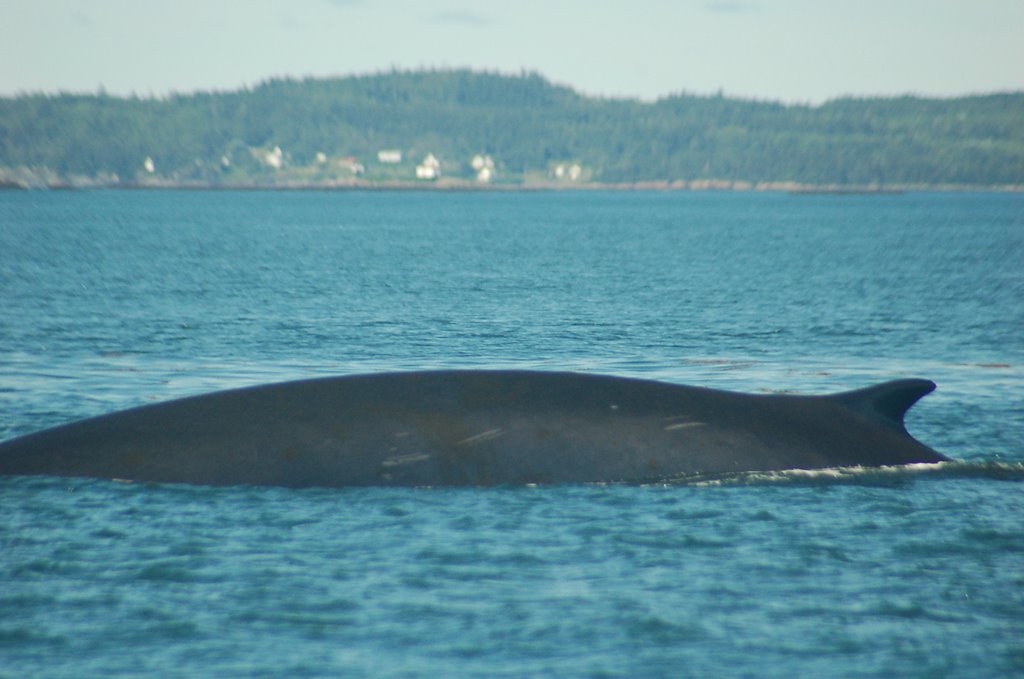
On the afternoon and evening trips we were just past Blacks Harbour and had great looks at a pair of finback whales. Here you can see the blaze and chevron of a finback whale. These markings are used to help ID individuals.


Here you can see some scars on the left side of this finback whale. These marks can also be used to help ID individual whales.


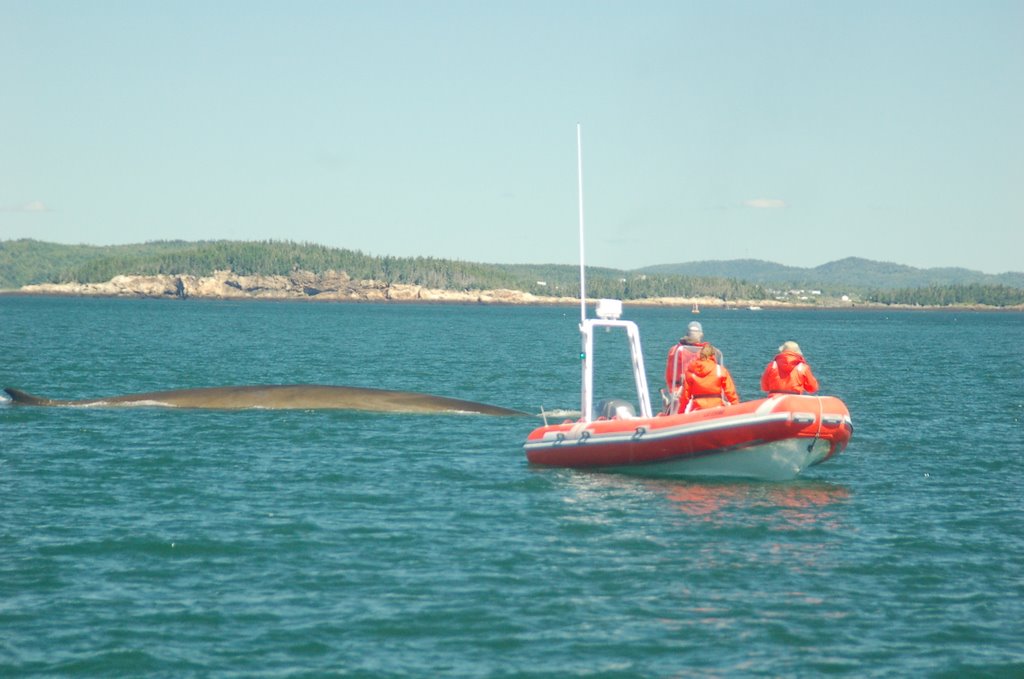
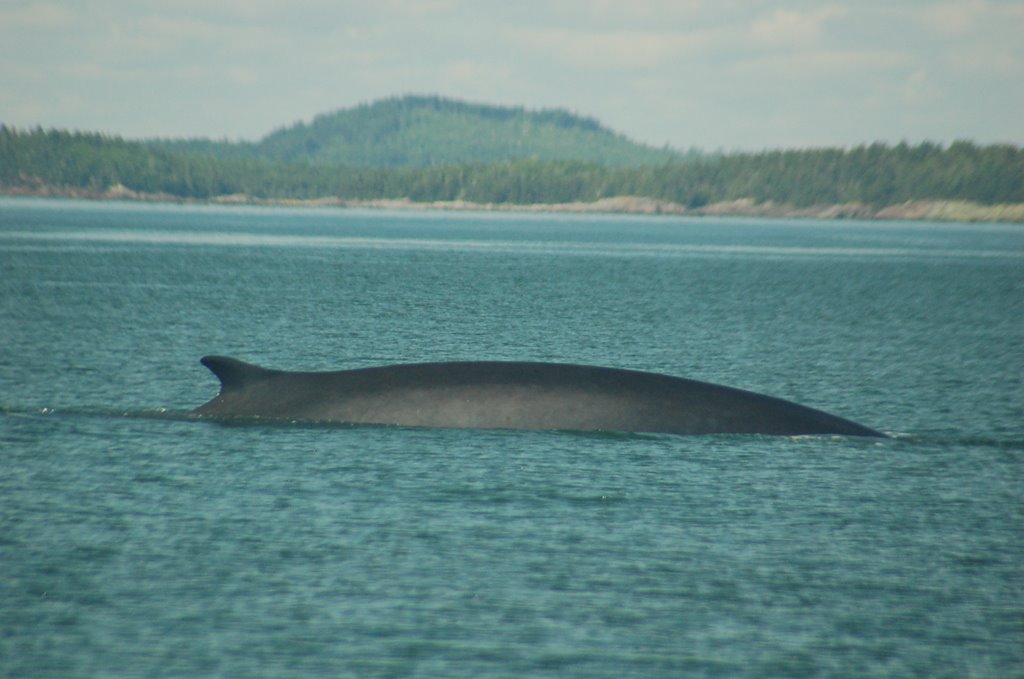
Our scout boat here with passengers had a close encounter with a finback whale. You can see the "blow" here, the whales breath that isn't really a spout of water but simply hot air and with a little sea water that was on their nostrils when the whale surfaced.


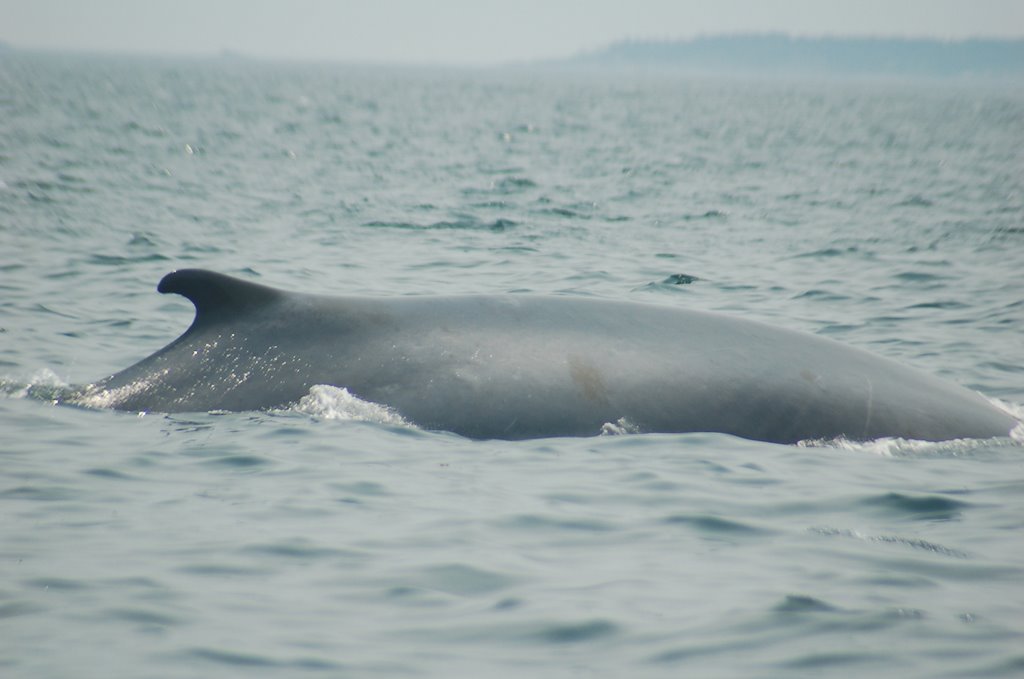
You can see the size of the finback compared to our 22 foot scout boat. Our scout boat will go out on some mornings to "scout" for whales and we can take a few passengers for a personal trip, and then they join the Quoddy Link to warm up and take the return trip home through the islands.


The forecast is good again tomorrow, I'm keeping my fingers crossed and I will keep you posted.

Saturday, July 29, 2006

Finbacks and LESS fog

Hello there, it's Danielle from Quoddy Link Marine. We had a great day today, finally a day with less fog and we got to see finback whales, and not too far from Bliss Island, only about 10 miles from St. Andrews. I have sent my photos to Allied Whale in Bar Harbour so they can try and identify the individual finback whales.


Yesterday we were in the islands with minke whales, 3 great trips. On our evening trip there was a lot of activity in Head Harbour Passage, hundreds of gulls and plenty of porpoise all actively feeding in herring. Here you can see a harbour porpoise with it's triangular-shaped dorsal fin. They are incredibly difficult to photograph because of their speed and unpredictability.
The forecast is good for tomorrow, I'll keep you posted on our sightings. Thanks for reading.

Thursday, July 27, 2006

And the offshore fog continues

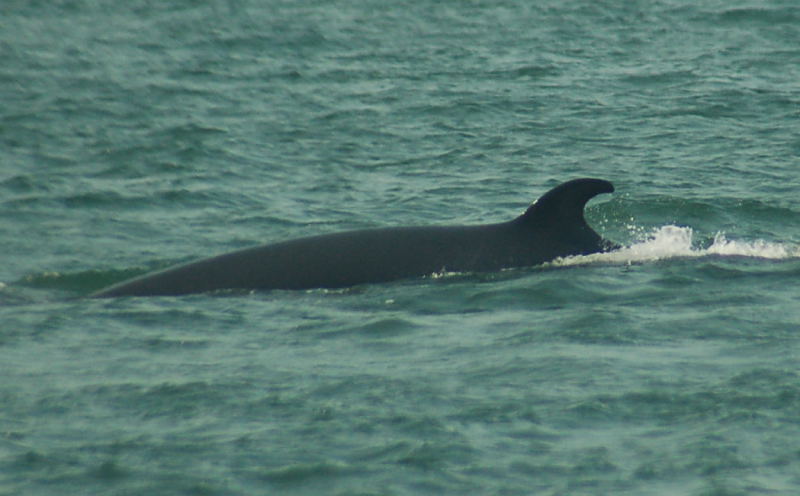
Hi there, it's Danielle, senior naturalist and photographer with Quoddy Linke Marine. Well, the fog still looms offshore but we had 2 days of great inshore trips with atleast 4 different minke whales. Here you can see 2 individual minkes, notice the difference in the shape of their dorsal fins, the fins on their backs.
Both of these whales were photographed in Head Harbour Passage, between Campobello and Deer Island.


The minke whales have been SO GOOD to us, my personal favorite whale, I just have to root for the "underdog". They have saved the day more than once. A highly under-rated whale, minkes may be a smaller whale (if you consider 30 feet and 20,000 lbs small) but they are a special part of the wildlife found here in the Fundy Isles. No matter how much I love minke whales I am still hoping the fog will disappear soon so we can head offshore in search of finbacks and humpbacks.

Tuesday, July 25, 2006

Fog and southwest winds...


We had a day of fog in the morning and strong southwest winds in the afternoon but it was warm and calm in Head Harbour Passage. We spent a nice amount of time with minke whales on both trips. On our afternoon trip we had a great eagle sighting, with a few adults and atleast 5 juveniles all soaring and flying together. They are calling for less strong winds tomorrow so we will see if we are able to get offshore to look for finbacks and humpbacks. I will keep you posted, check back soon.

Monday, July 24, 2006

Minkes on the 23rd, finbacks today!

We were fogged into the Islands on the 23rd of July but we had 2 very nice trips with minke whales in Head Harbour Passage.


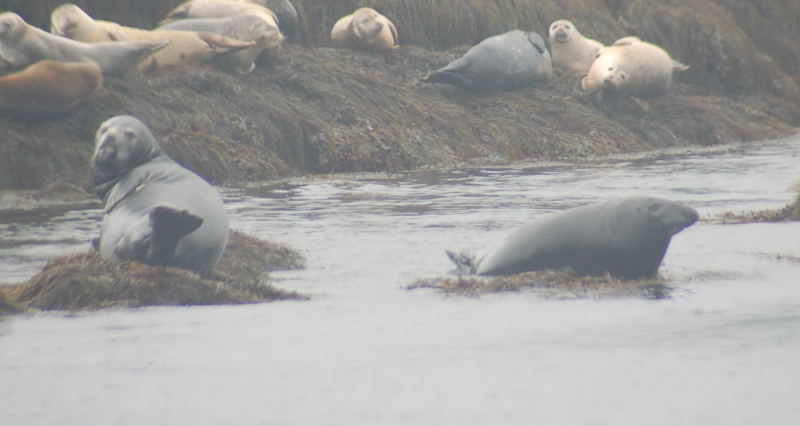
Here are some grey seals hauled out on some reefs that have been exposed by the ebbing tide. At Casco Bay Island we often see grey seals as well as harbour seals (in the background). They will haul out right beside each other.


Today was a good day on the water, it was my day off but both finbacks and minke whales were sighted. I'm back at it tomorrow, and I will keep you updated.

Saturday, July 22, 2006

Finback, minkes and FOG!

We headed out this morning and afternoon despite the fog and we had 2 great trips. Our scout boat had gone out before both trips to "scout" and search for whales. We spent a good part of each trip with a finback whale we have become very familiar with over the past few weeks. Also, in the afternoon we got to see 2 minke whales in Head Harbour Passage. With bald eagles, harbour seals and porpoise on both trips we had a great day even with the "Fundy Fog". We'll be keeping our fingers crossed for good visibility and calm seas, I'll keep you all posted.

Friday, July 21, 2006

It's a girl!

Hello, it's Danielle, senior naturalist and photographer with Quoddy Link Marine. We finally had some nice weather with no fog and we able to get offshore and spend some time with Cork again. We now know from molecular genetic testing on a skin sample done by Provincetown Center for Coastal Studies that Cork is female. This is a series of shots showing her terminal dive


The small black "cork" shape on the right-hand side of her fluke is how she got her name.


The scar shown here is most likely from an entanglement with fishing gear. It is estimated that more than 50% of the humpbacks in the Gulf of Maine have entanglement scars.


A pair of Atlantic puffins, a more common site this year than some previous years. These small pelagic seabirds are a favorite among passengers due to their colourful beaks and "cute" appearance.

Tuesday, July 18, 2006

Meet Cork!


Hello, it's Danielle. With the help of Jooke Robbins at the Provincetown Center for Coastal Studies the humpback we have seen has been identified as "Cork", the 2002 calf of Mica. We saw Cork in 2004 and "he" was named at the 2006 whale naming conference I attended in Provincetown, MA. Researchers with the Gulf of Maine Catalogue were excited to see a picture of "Cork" because "he" hadn't been seen since 2002 when "he" was with "his" mom, Mica.
We have been confined to the inshore islands for the past few days because of the fog and wind but we have been seeing minke whales on a regular basis. I will keep you posted on our sightings, thanks for checking in.

Saturday, July 15, 2006

Basking shark and a humpback whale...a very nice day

We had a very nice day today out on the Bay of Fundy. NO FOG!! On our morning trip we ended up seeing a basking shark, the second largest fish in the world! A nice surprise. We also took a trip over to Whale Cove, Grand Manan to see a minke whale.


On our afternoon and evening trip we got to spend some time with a humpback whale of Eastern Wolf. This whale hasn't been identified yet but I will make sure to keep you all posted.

Monday, July 10, 2006

A day of fog and strong southwest winds confined us to the islands but we did see 2 new minke whales.
This is Breadknife, a minke whale we have been watching for many years now. We spotted "him" off Windmill Point, Campobello Island.


Another minke whale we have seen in previous years, we saw this one between Eastpot, ME and Campobello Island, NB.


Hopefull the weather will clear up soon and we can head back out of the protection of the islands in search of finbacks and humpbacks.

Sunday, July 09, 2006

First Humpback Whale Sighting!!

We had our first humpback whale sighting today about 16 nm from St. Andrews! Typically we don't see humpbacks regularly in our area until mid-August but last year they showed up in early July and stayed. We will have to keep our fingers crossed.

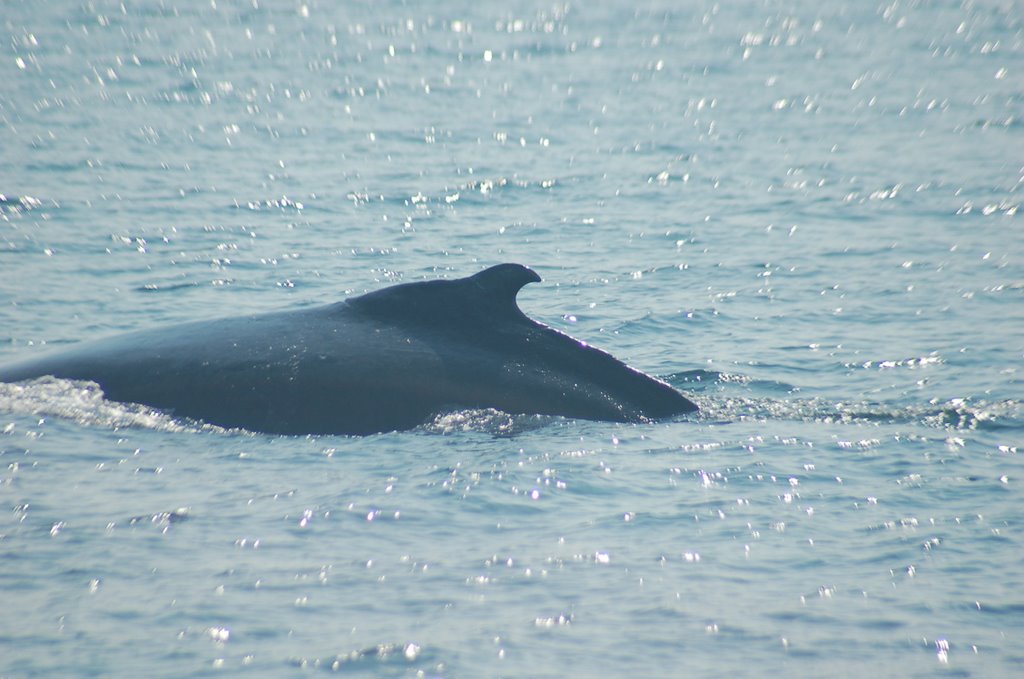
The humpback we saw today wasn't in the "mood" to show us "his" flukes. This is a picture of his dorsal fin, and you can see why they are called humpbacks, their dorsal fin is located on a small hump. We also saw 2 finbacks today and a minke whale.

Saturday, July 08, 2006

Finback Whales

We have been seeing finback whales almost almost everyday now. I have photographed 2 individual whales. Finbacks are identified by the shape of their dorsal fin as well as the colourations and permanent scars and marks on their back and caudal peduncle.

Here you can see the "blaze", the white markings extending from the lower right jaw over the back behind the blowhole. This blaze is used in identification.


This is the dorsal fin from the whale above.


This is another finback that we have seen. You can see we were not far from land, very close to Bliss Island. You can see the difference in the shape of the dorsal fin of this finback and the one shown above.


I will make sure to post any identifications I get. These images will be sent down to Allied Whale in Bar Harbor where they have a catalogue of North Atlantic finback whales.

Tuesday, July 04, 2006

First Finback Sighting

Hello there, it's Danielle, senior naturalist and photographer with Quoddy Link Marine. We had our first finback whale sighting today, something we are all very excited about. I wasn't able to get any pictures because I was in the office today. I will post pictures as I get them.
Here is a minke whale that we saw in Head Harbour Passage on July 3rd. Head Harbour is a popular spot to look for whales. It is a deep passage where there is a lot of upwelling, and brings the cold, nutrient-rich water to the surface and provides plenty of food for the whales.

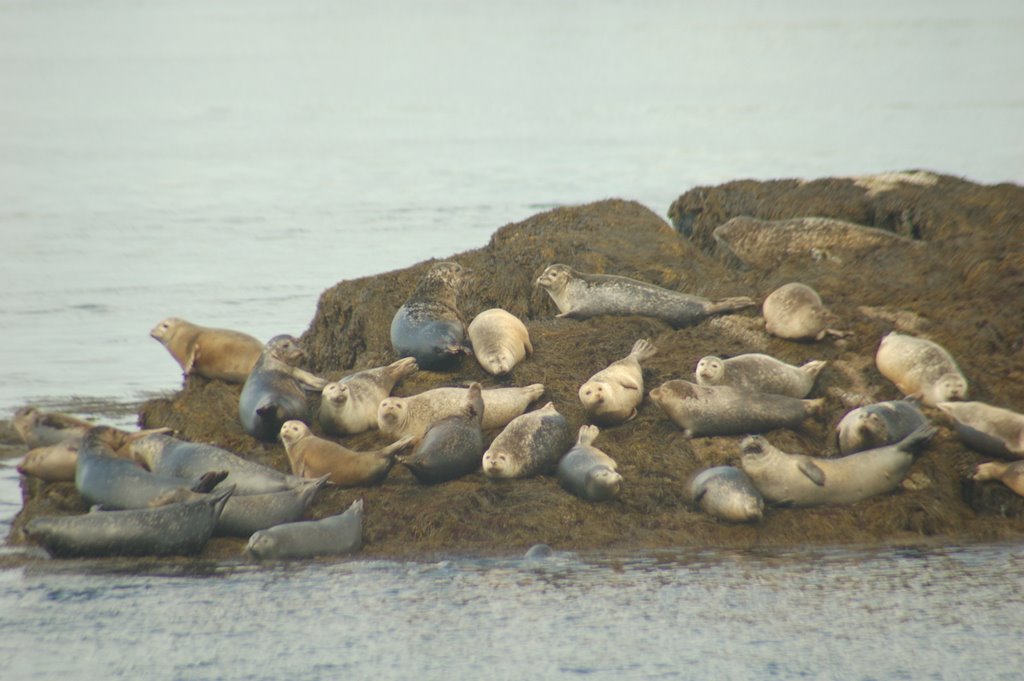
Harbour seals are abundant in our area of the Bay of Fundy. They are incredibly dog-like in profile and are always entertaining to watch.


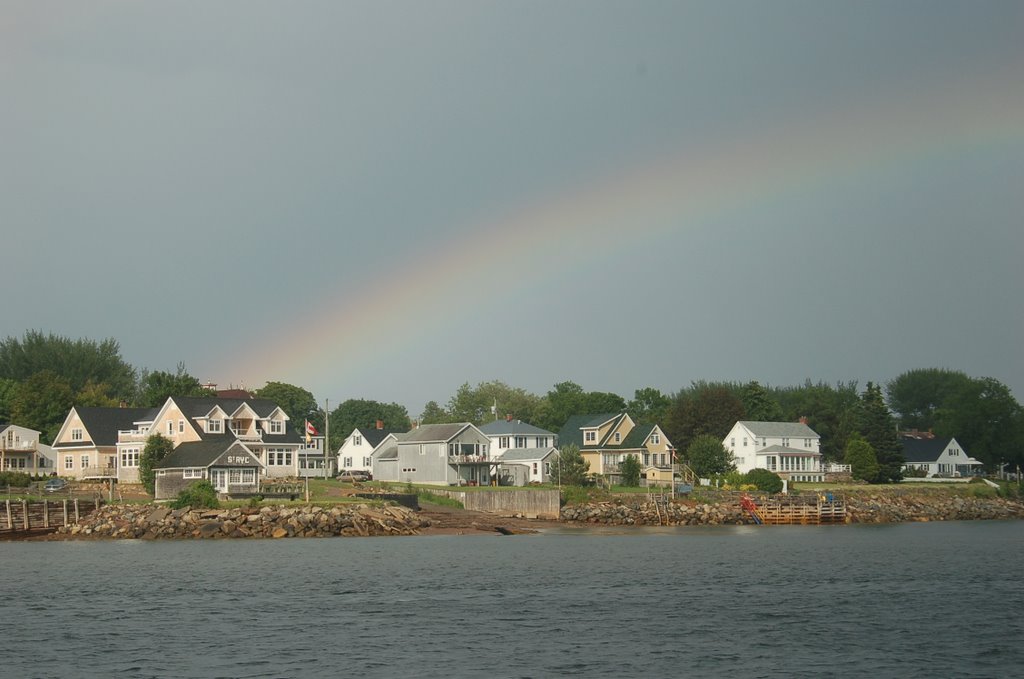
A rainbow appeared over the town on Canada Day (July 1st) after our 2:00pm trip. Just another beautiful day in St. Andrews-by-the-Sea.


Wednesday, June 28, 2006

Fog fog go away...

Hello there, it's Danielle, photographer and senior naturalist with Quoddy Link. We officially started our whale watching season on Saturday, June 24th and were greeted with some very thick fog, and it hasn't left yet. This isn't stopping us from going out and looking for whales. Given it is very early in the season the whales have been difficult to find but we have still spent time with some incredible wildlife.


Harbour seals are commonly seen in the Bay of Fundy. Even in the fog we are still able to view them hauled out on rocks and reefs. Here you can see their small fore flippers and their natural colour variation.

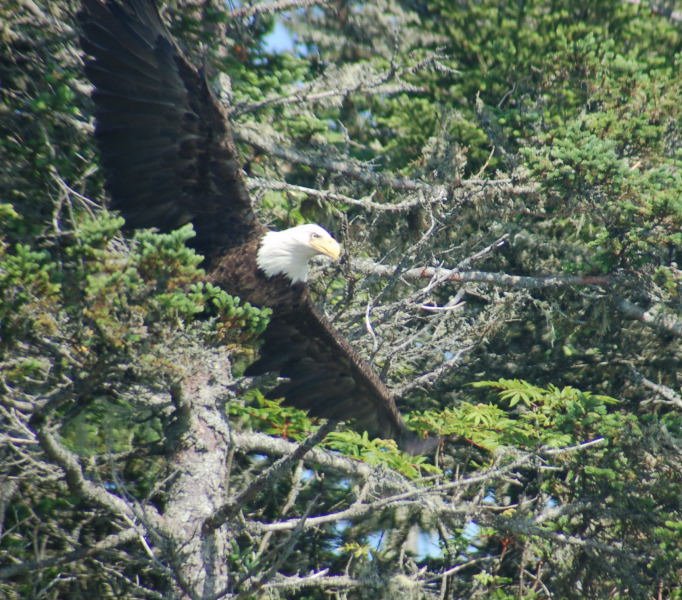
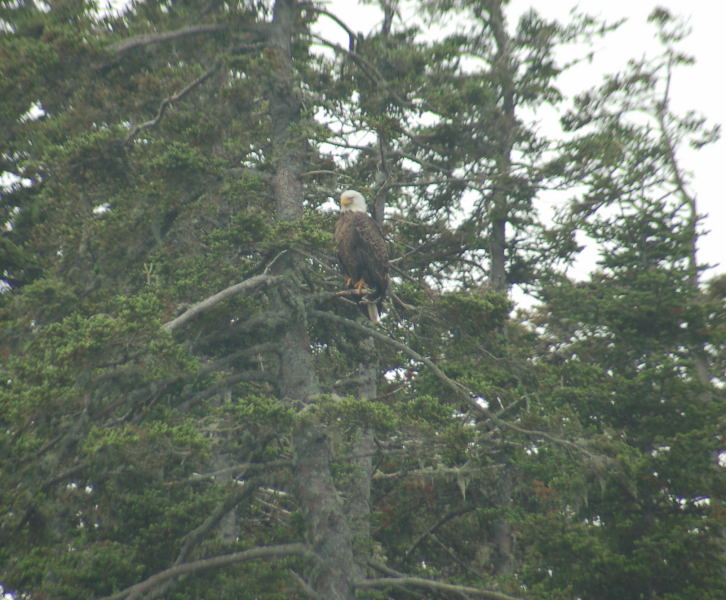
The fog has been persistent offshore but we have had some clear days in amongst the West Isles. This is a mature bald eagle just taking off. Both the males and females develop this colouration with the white head and tail feathers and brown body, the juveniles are brown and molted. Bald eagles are numerous in the area and maritime eagles have participated in re-introduction programs in the USA and have helped to remove the American bald eagle from the endangered species list.

I will keep you posted in the days to come. All of us in St. Andrews are hoping the fog will lift soon.

Tuesday, June 20, 2006

First Whale Sighted!


Hi, it's Danielle again, senior naturalist with Quoddy Link Marine. I just wanted to let you know we saw our FIRST WHALE on June 19th. It was a minke whale sighted off East Quoddy Head Light, on the northern tip of Campobello Island. Minke whales are usually the first species of whale to arrive in our part of the Bay of Fundy. They are the smallest baleen whale we have here, averaging around 25 feet.

The minke was sighted on a nature cruise. Even though it is early to see whales consistently in our area there is still lots of wildlife out there in the Fundy Isles. We have been doing many chartered nature cruises taking us out into the Bay of Fundy. There are lots of harbour seals and bald eagles around too see, as well as harbour porpoise and lots and lots of beautiful scenery.

Our first official whale watching trip is on June 24th, this Saturday. Come and join us to experience everything the Bay of Fundy has to offer....Catamaran Style.
All 3 photographs taken by R.J. Sauk on a nature cruise.

Sunday, May 28, 2006

A trip to Machias Seal Island


On May 24th we had the privledge to visit Machias Seal Island with a group of 20 students from The Huntsman Marine Science Center. Basically a rock with a lighthouse surrounded by shoals, Machias Seal Island is located 10 miles SW of Grand Manan in the mouth of the Bay of Fundy. What makes Machias Seal Island so special is that it is a nesting site for colonies of Atlantic puffins, razorbills, common murres and Arctic terns. The 3 1/2 hour trip out down Western Passage and out through the Lubec Narrows was calm and surprisingly warm for late May. About 8 miles from our destination we started seeing Atlantic puffins and razorbills.

When we arrived at the island we saw hundreds of razorbills and common murres rafting on the surface of the water and the odd Atlantic Puffin flying by.


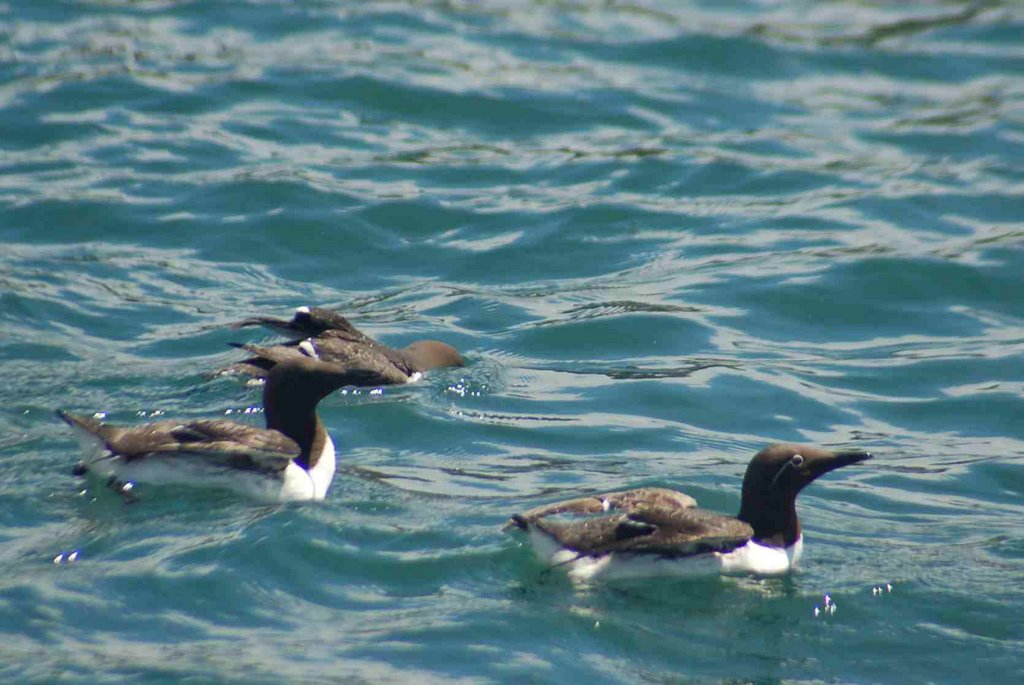
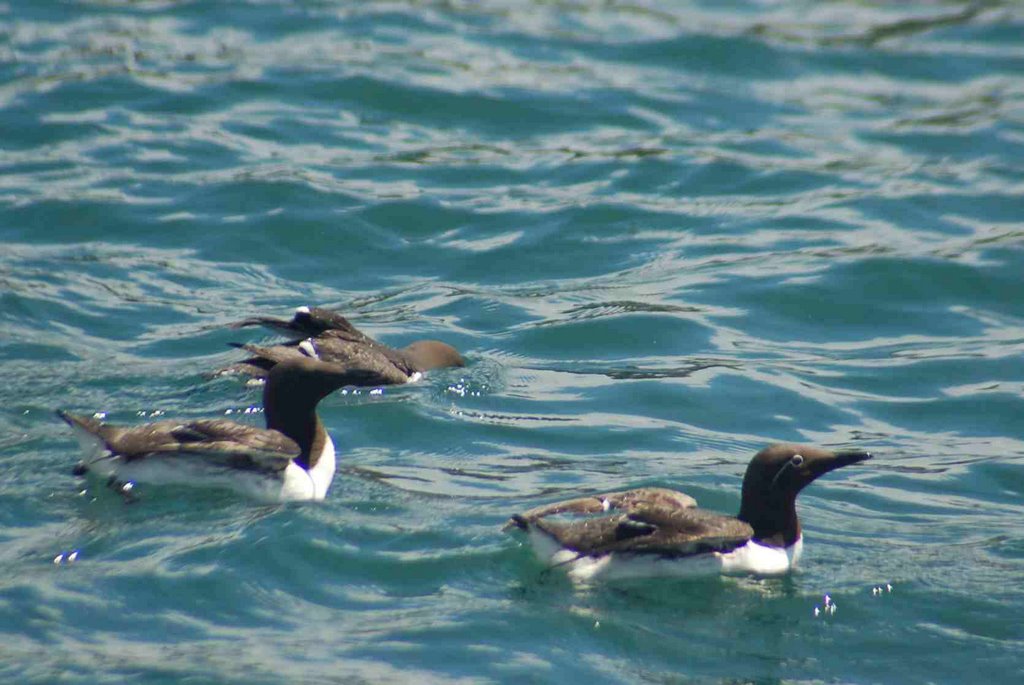
These pictures are razorbills, a heavy-headed, short necked alcid that can be identified by it's thick bill (with a white line that extends from the base of the bill to the eye) and long tail which points upward while swimming.


Alcids are diving birds who use their wings instead of their feet to propel themselves, or fly, under the water in search of food. Other alcids in the Bay of Fundy are Atlantic puffins, common murres, dovekies and black guillemots.


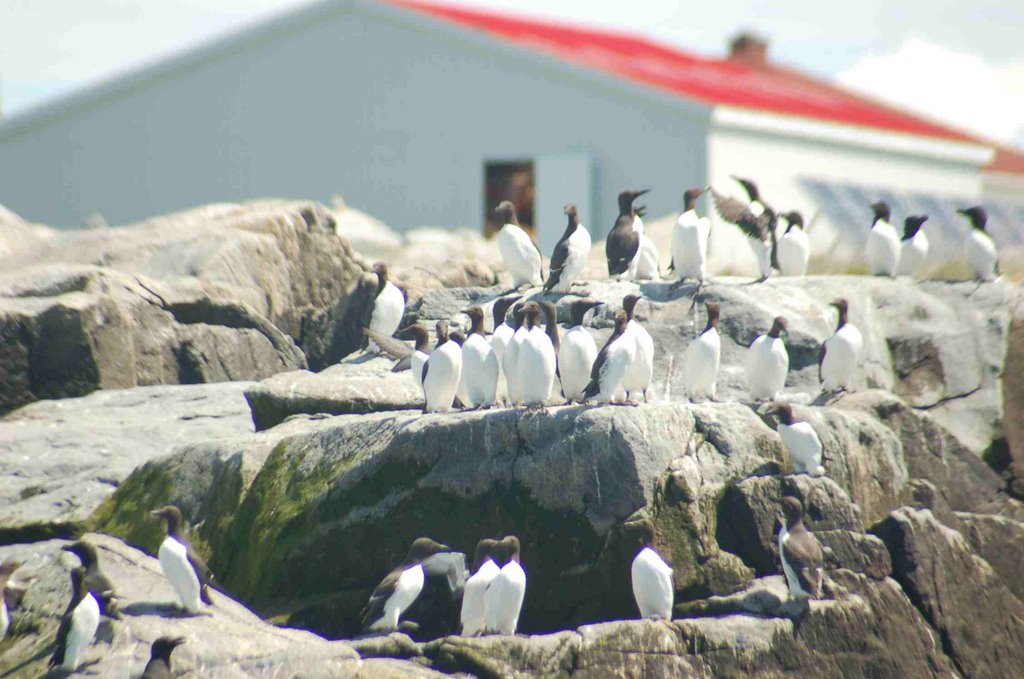
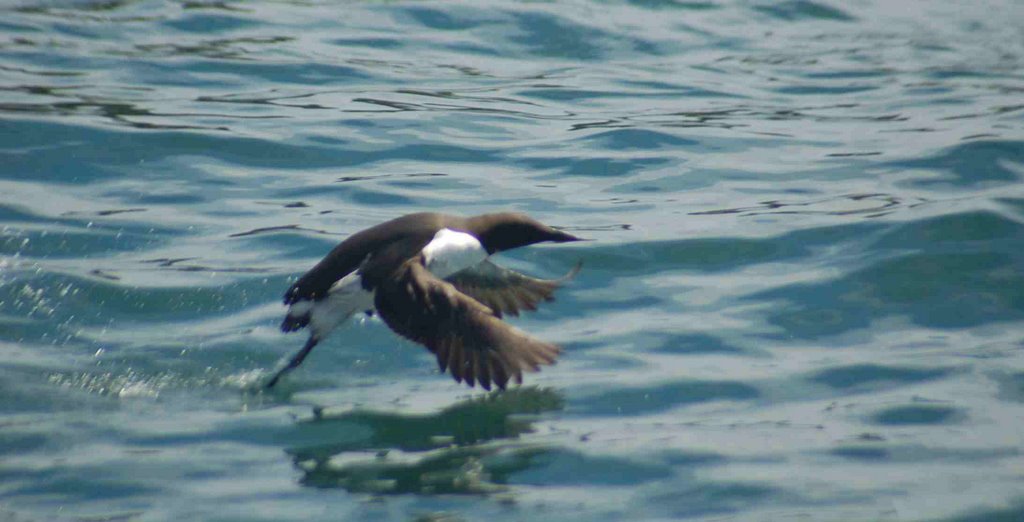
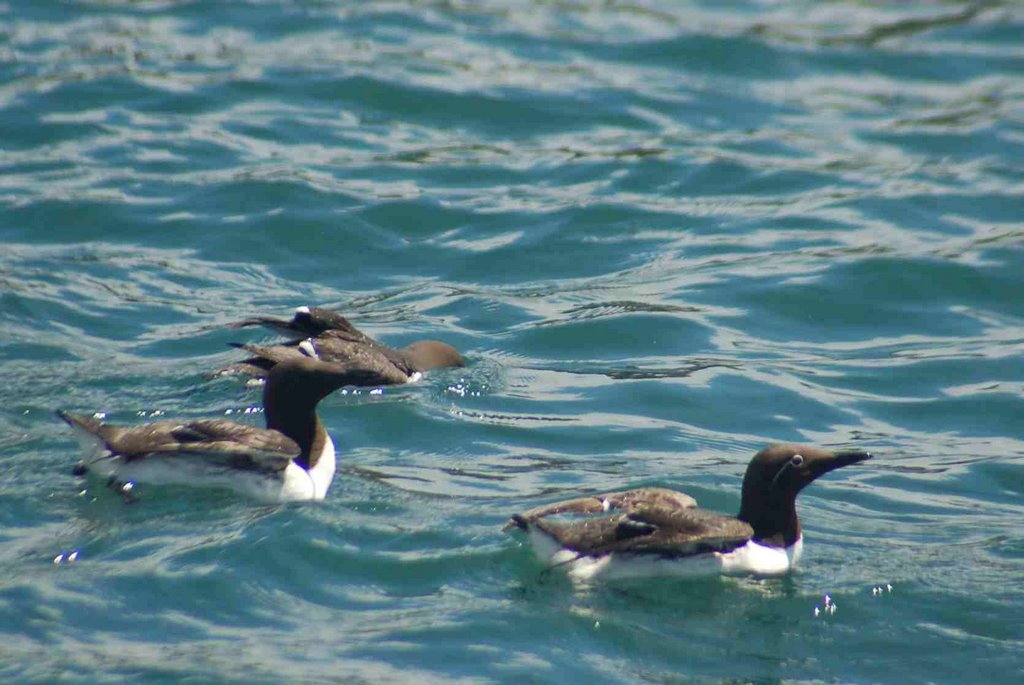
Ccommon murres also nest on Machias Seal Island. They can be difficult to differentiate from the razorbills at first glance but with their long, thin bills and almost chocolate brown colour with a close look you can see the difference. Common murres also have a thin, white eye ring.


The birds on the rocks here are common murres. One of birds that nest on Machias is difficult to photograph unless you land on the Island. The Arctic tern was flying overhead our entire visit, screeching and shrieking, warning us to stay away from their nests. If you are a visitor on the island, they actually give you a stick to hold because the terns will "dive-bomb" your head and try and strike the highest point. If you hold a stick, the stick gets hit with their pointed bill instead of your head. Arctic terns are champion long distance migrants, wintering in Antarctica and nesting as far north as the Arctic, traveling an annual distance of more than 40, 000 km. Terns can easily be identified by their long tail feathers, thin sharply pointed back wings and shrill call.
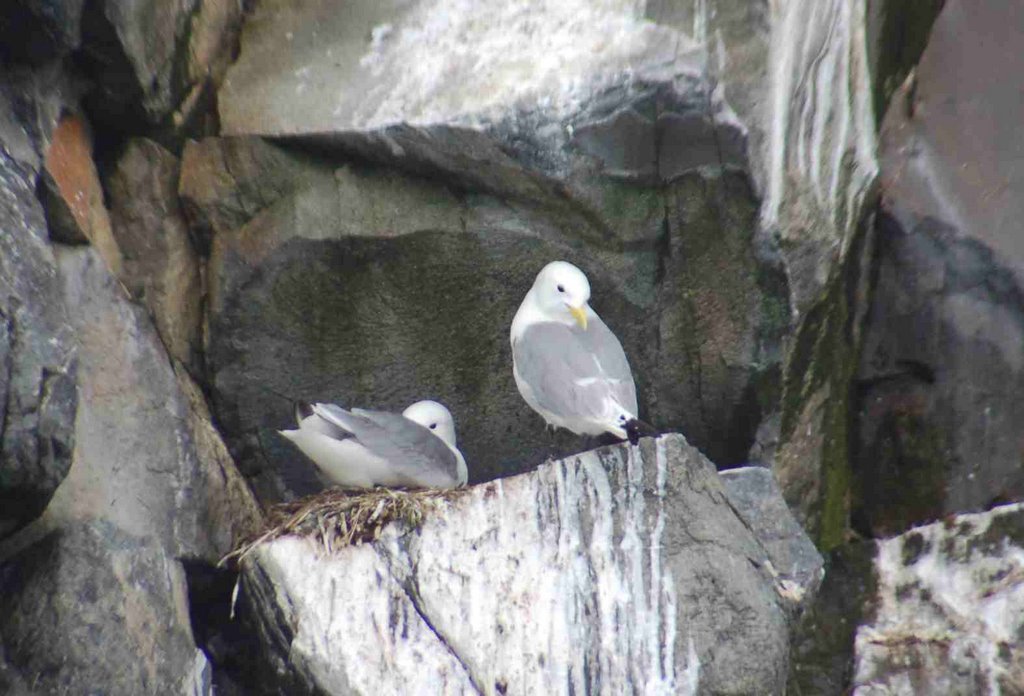
On our trip home we spent some time with nesting black-legged kittiwakes and double-crested cormorants on Whitehorse Island.


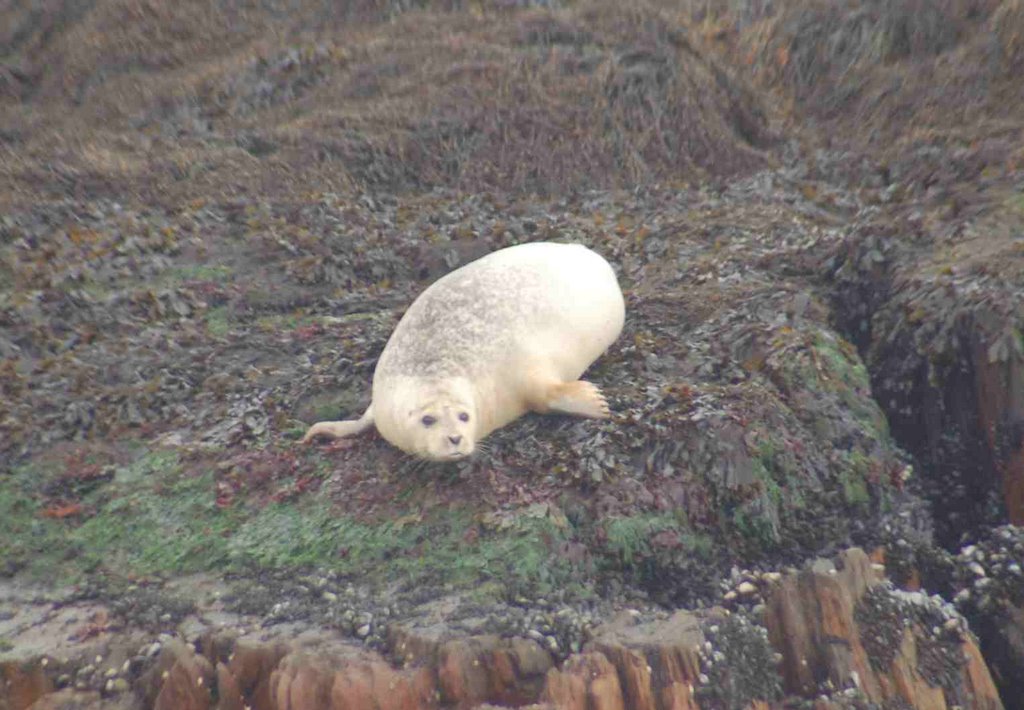
We also stopped at a common seal haul-out site, Splitting Knife, a shoal that's barely visible at high tide, but as the water ebbs becomes an ideal spot for harbour and grey seals to haul out and bathe in the sun.


Machias Seal Island is a rare and special place. It is actually a disputed territory with both Canada and the USA staking claim to the land. Canada has maintained the island for so long that it basically has "Squatters Rights". It also has the only manned lighthouse in the maritimes. You can visit Machias Seal Island through tour companies located on Grand Manan, NB and Machias, ME.


We are looking forward to our whale watching season, it's just around the corner now. We saw quite a few harbour porpoise on our trip to Machias Seal Island which is a good sign. I'll make sure to keep you posted on everything we are seeing as the season continues, so check back often, or better yet, coming whale watching with Quoddy Link Marine...Catamaran Style starting June 24th.